

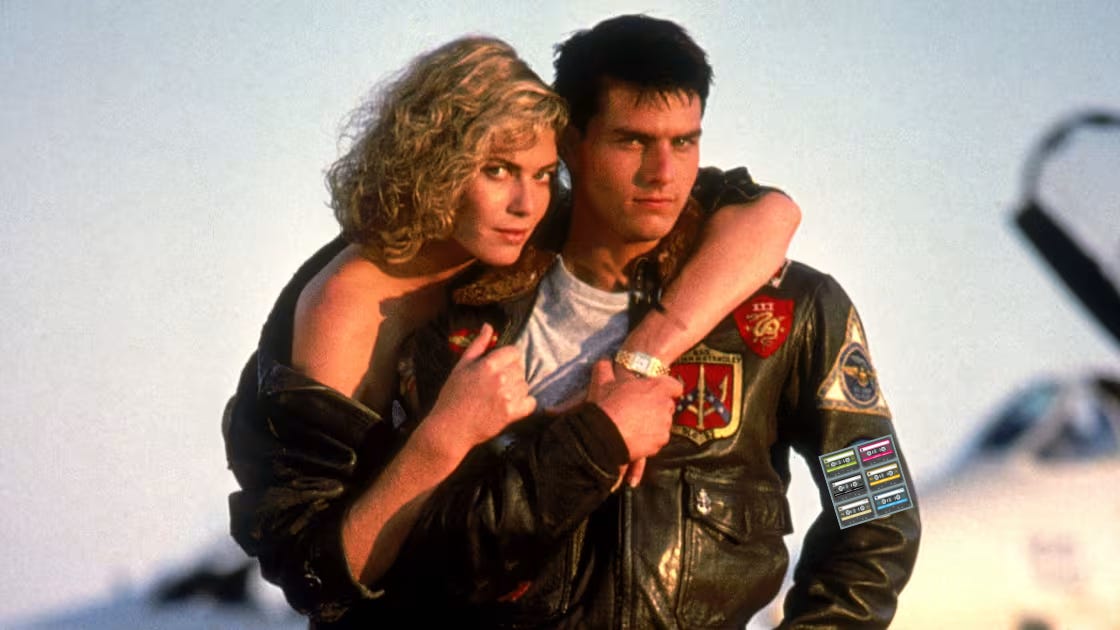
Well, well, well. We have arrived at 1986, the year yours truly turned 16 and entered his sophomore year of high school. Back when some were living on a prayer while others’ futures seemed so bright, they had to wear shades; we walked like Egyptians while keeping our hands to ourselves. OK, I’ll stop.
Research suggests that what you listen to in your teens dictates your taste into adulthood,1 so thankfully, I didn’t conform to the pop culture trends of the time. Instead, I dipped my ear into most everything. Still, the thin, digital production style of 1986 was practically inescapable, as it seeped into virtually every type of music being released.
I think my taste was already formed by the time I turned 11, and everything that came after either reinforced it or expanded it. By the time I was 16, I was most definitely not hip to the current scene, already feeling like an old soul and preferring what I’d grown up with in the ‘70s and early ‘80s. At the time, I found the decade too plastic, too shallow. I didn’t like a lot of the movies, the TV shows were lame,2 and even the cars were boring.
I mean, really. Which Z28 would you rather be seen driving?


Of course, in retrospect, through the rose-colored tint of nostalgia, I miss the simpler times, when we were choosing between Mötley Crüe and Metallica. Or Hüsker Dü and the Replacements. Or RUN-DMC and Aerosmith. Ah, youth.
For the millennials and Gen-Zers who weren’t there, here was 1986 in a nutshell for kids like me…
Yes, that was part of my personality, as I went through quite the metal phase: Metallica, Megadeth, Slayer, Testament, Metal Church, Fates Warning, et al. I recall buying Ozzy’s The Ultimate Sin when it came out and bringing it to school to show it off, since I was the first one in my group to score it. Jake E. Lee was still his fretman at the time, and we waited impatiently for the bell at the end of the day so we could rock out in the parking lot behind the Fast Fare across from the school. By the time “Thank God for the Bomb”3 lumbered forth from the speakers of Warren Cash’s4 1979 Camel Camaro, however, the half dozen or more of us had dwindled to just two or three.5

I was a southern kid raised in a small town, so I was also into country music and southern rock and blues and soul—not to mention I started my radio career in 1986. It was at a small AM thousand-watter that played a weird mix of country and adult contemporary. So I got to experience—and spin—the New Traditionalist movement as it happened in real time. I had the honor of fading out Lee Greenwood while cueing up the likes of Steve Earle, Lyle Lovett, Dwight Yoakam, and Randy Travis…all of whom had debut albums that year. No wonder Earle referred to that era as “The Great Credibility Scare.”
It wasn’t just the new guns, though. Hank Williams, Jr had been riding high for most of the decade and would get even bigger with the following year’s Born to Boogie. In ‘86, he issued Montana Cafe, featuring Dickey Betts on the opening track, “Country State of Mind” (that’s Dickey drawling “I know where Hank, Jr is” at the end), and Tom Petty, Reba McEntire, Willie Nelson, and Reverend Ike (!) on the closing cover of Hank Sr’s, “Mind Your Own Business.” Speaking of Willie, 1986 gave us a take on the David Lynn Jones-penned “Living in the Promiseland,” which is somehow even more relevant now.
Not to be left out, Waylon signed with MCA and gave us an underrated gem of an album that featured his take on Steve Earle’s “Devil’s Right Hand” and a faithful version of Los Lobos’s “Will the Wolf Survive.”
More on the music of the year further down. First, let’s see what 1986 offered us in…
TV and Film
I didn’t watch much TV that wasn’t MTV or HBO at the time, but I do remember these…
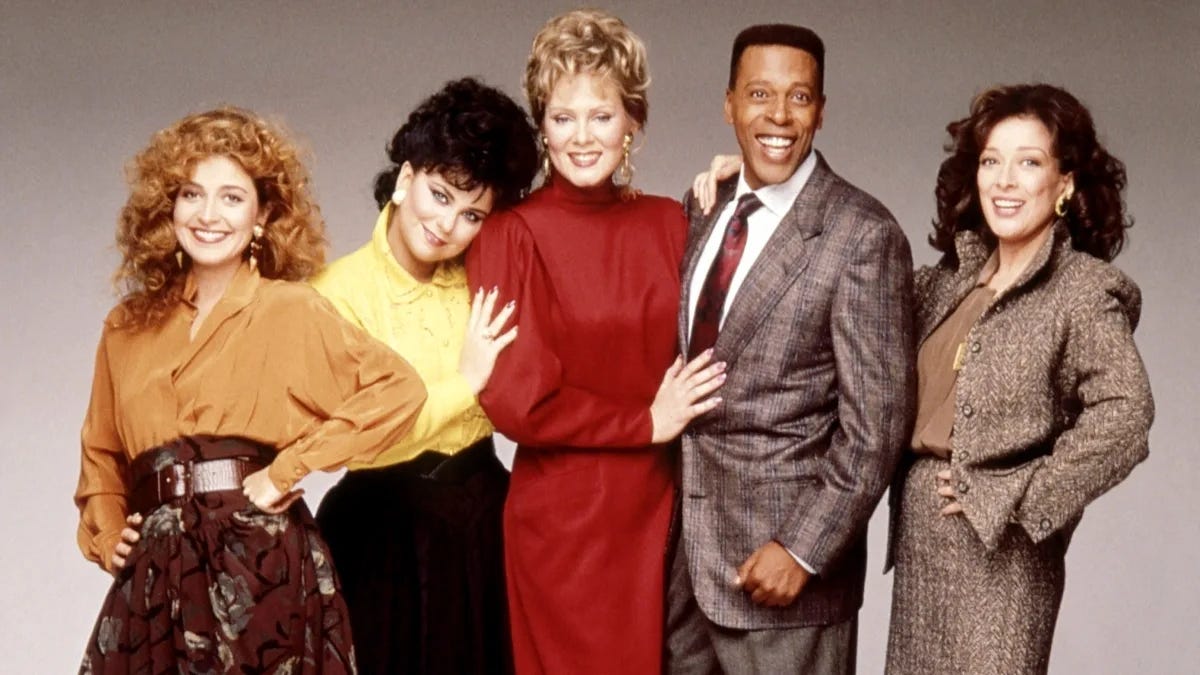
The one show in the 1980s that featured progressive Southerners, Designing Women acted as a refreshing antidote to the hillbilly stereotypes of the Duke boys and the power-hungry Ewings of Dallas.
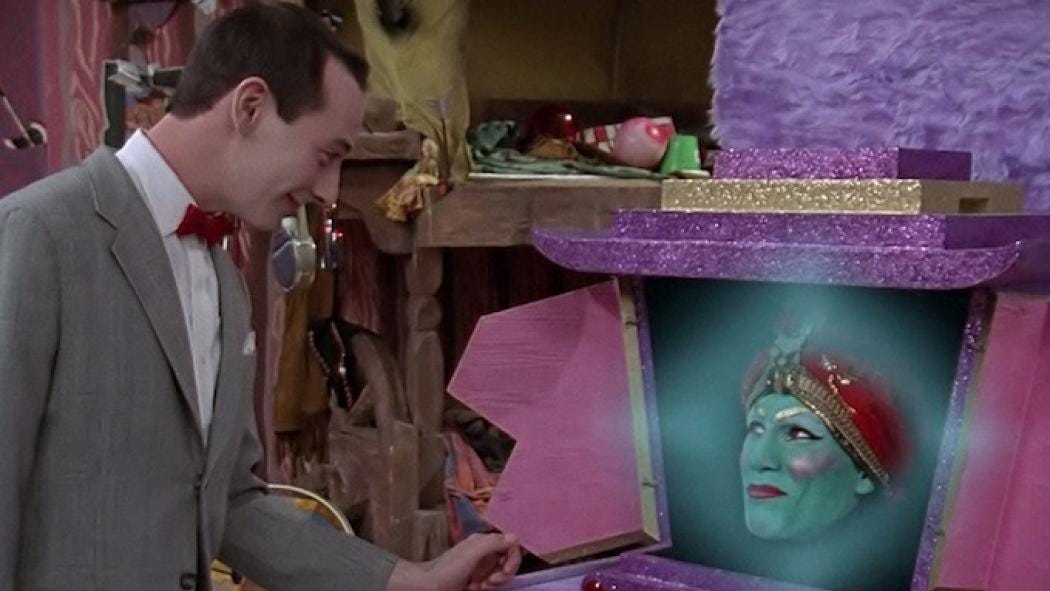
It was also the year Pee-Wee’s Playhouse debuted on CBS.6
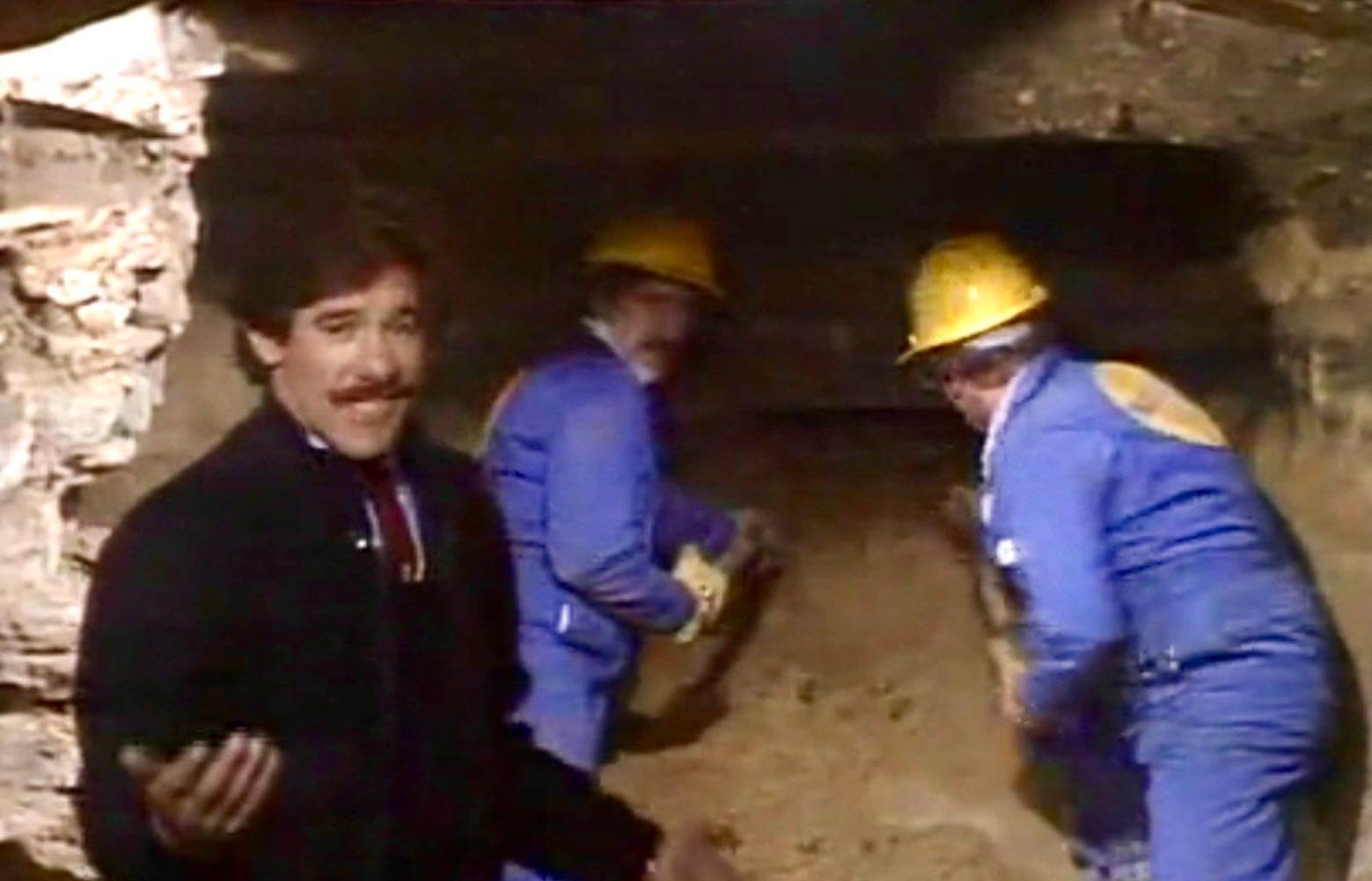
While Paul Reubens was running around his playhouse, Geraldo Rivera assured us he would make broadcast history by breaking into Al Capone’s vault. Boy, did he ever, when he came up literally empty-handed.7
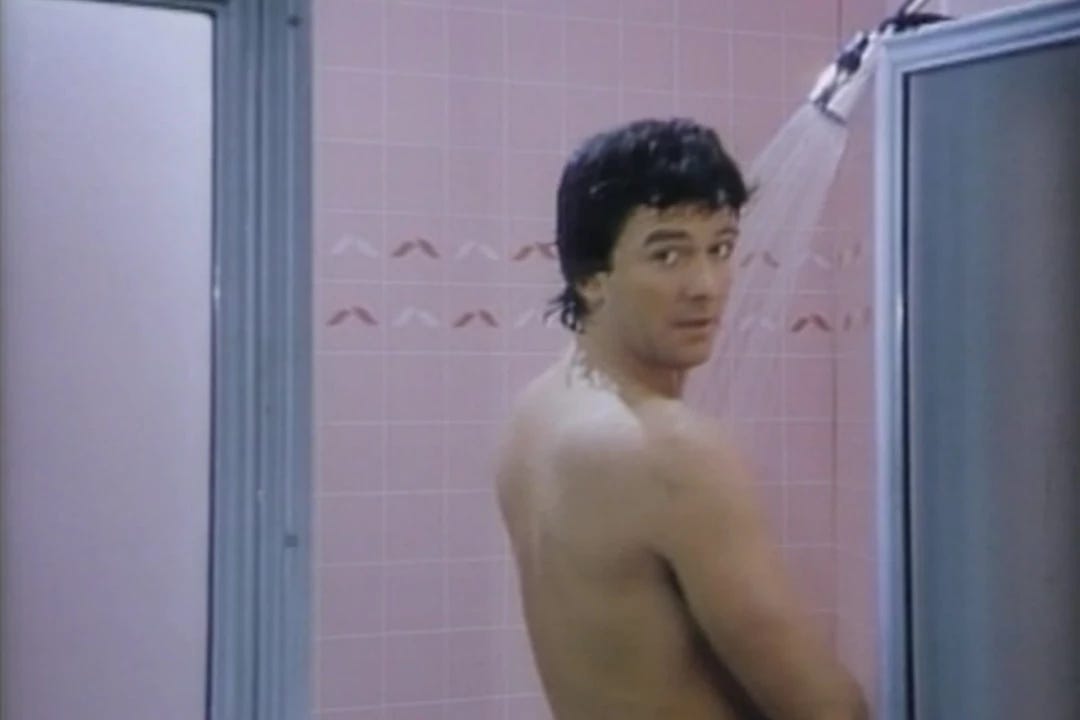
Speaking of the Ewings, there was that weird plot about Bobby dying in a car accident, and the entire following season WAS A DREAM when his wife wakes to find him…IN THE SHOWER….
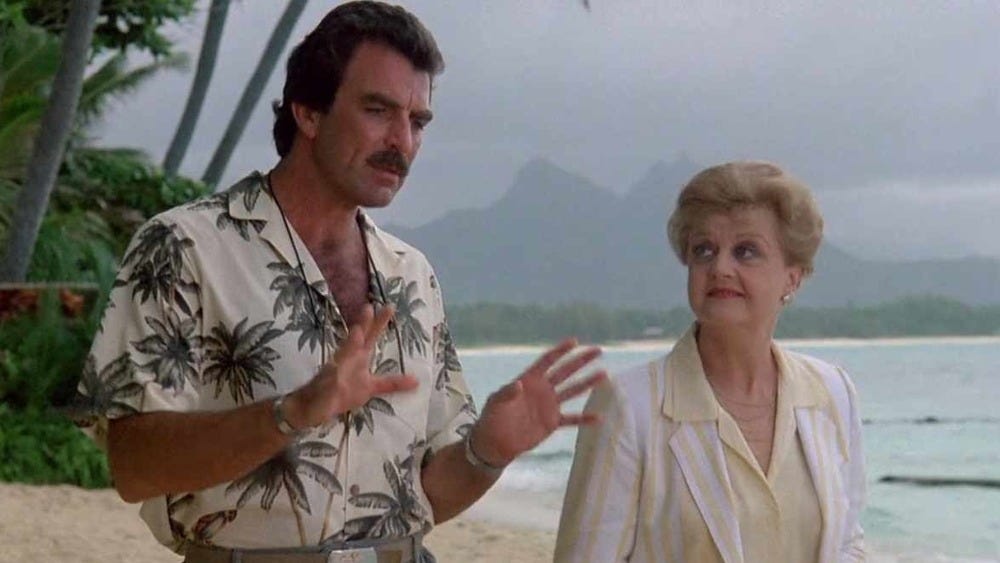
Then, there was the cross-promotion between Magnum PI and Murder, She Wrote. It’s hard to believe that two titans of crime-solving could occupy the small screen at the same time.
Speaking of crime, there was also the time Zappa showed up on Miami Vice playing a sleazy crime boss…
It was also the year one of my all-time heroes produced probably my favorite set of his. George Carlin’s Playin’ With Your Head was so heavily quoted among my core group of friends that I’m sure we had the entire hour memorized. You can ask my wife how many times I reference parts of it, even now.
On the big screen, after the adventurous and groundbreaking cinema of the ‘70s, the 1980s were mostly a cesspool of formulaic, plastic nothingness. Still, a few made their mark and lasted beyond the moment. Decades before we were subjected to 50 Shades of Grey, Mickey Rourke and Kim Basinger played around in the kitchen in 9 1/2 Weeks, while John Hughes continued giving us Gen X’ers films that confused and befuddled us. Alas, I never watched Ferris Bueller’s Day Off, and Pretty in Pink is probably the one movie starring Molly Ringwald I’ve never seen. You read that right. To this day, not a frame of either. And from the looks of both casts below, they still hold it against me. Oh, well.


I did, however, both read Stephen King’s “The Body”8 and saw Rob Reiner’s film adaptation, Stand By Me, as I’m sure you did, too.

Oddly, the same year Stand By Me was released to critical and public acclaim, King subjected us to Maximum Overdrive, the first film he wrote and directed himself. In a phrase, it was goofy as hell. At least AC/DC provided the soundtrack.

Speaking of hard rock soundtracks, there was also Trick or Treat, a horror movie making sport of the then-hot Satanic Panic, complete with backwards-masking suspense and Fastway providing the score. It featured a cameo by Ozzy playing a priest (har har), and the only thing really frightening in the film is Gene Simmons’ turn as a DJ. On second thought, the real horror probably occurred at the end of the month, when he saw how little a DJ actually gets paid.
After the success of Born in the USA, America finally gave Vietnam veterans the attention and honor they deserved. Well…they at least made a lot of money off their plight by making a ton of movies and plotlines about them in the latter part of the 1980s. From Rambo to Delta Force, everybody was heading back over to ‘Nam to bring home the POWs and looking for the MIAs. The one that rose above most, however, was the 1986 Oliver Stone9 film, Platoon.

It was also the year that Spike Lee gave us his first joint. His unmistakable style was already there from the start, and She’s Gotta Have It is still just as enjoyably provocative 40 years on, as is most of Lee’s work. And it features a supremely badass soundtrack, with bass provided by Spike’s ultra-cool and legendary dad, Bill Lee.

I remember seeing At Close Range in the latter part of the ‘80s. I recall it mostly took place at night, that Walken and Penn were father and son, and that Walken was a thief of some kind, and Penn followed in his footsteps reluctantly…or not…I don’t know. But I do remember Madonna’s “Live to Tell” provided a perfectly moody backdrop to the sinister bleakness. Maybe Penn’s character shot and killed Walken’s at the end? I don’t know. Hope I didn’t spoil it for you.

The Music
What a year it was. There was that awesomely disastrous appearance by The Replacements on SNL; College Rock was quickly working its way from the left of the dial on down to the commercial frequencies; and rap was moving into the mainstream. Tom Scholz finally got his crap together and released Boston’s long-awaited third album, Third Stage, which, of course, became a big rock hit. But then, sadistically, Mr. MIT made fans wait another eight years each for 1994’s Walk On and 2002’s Corporate America. Joke was on Scholz, though, when the law of diminishing returns took effect.10
Much of pop and R&B upped its game. Janet Jackson assumed Control while Prince danced Under the Cherry Moon, and Nu Shooz released the roller-skating anthem of the year. The Top Gun soundtrack gave us some crap (Kenny Loggins) and some treasures (Berlin). There were so many different scenes and sub-scenes that music became more splintered than it had ever been. Kids who were into the Smiths wouldn’t be caught dead hanging around anyone blasting a Poison cassette out of their IROC-Z, and the kids cranking Bad Brains mostly steered clear of the black t-shirt headbangers fist-pumping to Metallica’s “Damage, Inc.” Hell, even Metallica and Megadeth fans were split into camps.11
Southern Soul had a big year, with both Clarence Carter and Marvin Sease releasing classics of the genre, bringing the raw sound of the late ‘60 and early ‘70s into the ‘80s. Carter went down to his basement with a drum machine and keyboard to create the delightfully ribald classic “Strokin’.”12 A year later, Sease got even nastier when Ghetto Man was re-released as his major label debut, adding the infamous “Candy Licker” to the end. Along with similar soul men such as Roy “C” Hammond, Carter and Sease packed dance floors and backseats throughout the South.


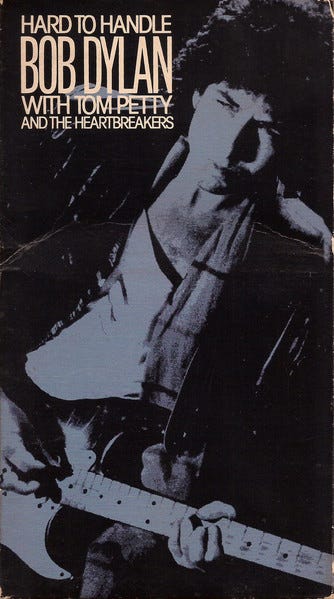
Bob Dylan13 recruited Tom Petty and the Heartbreakers, hitting the road on the “True Confessions” tour in early ‘86, ultimately recording a couple of shows in February in Sydney, Australia, and releasing them as Hard to Handle14 on the mighty VHS format.
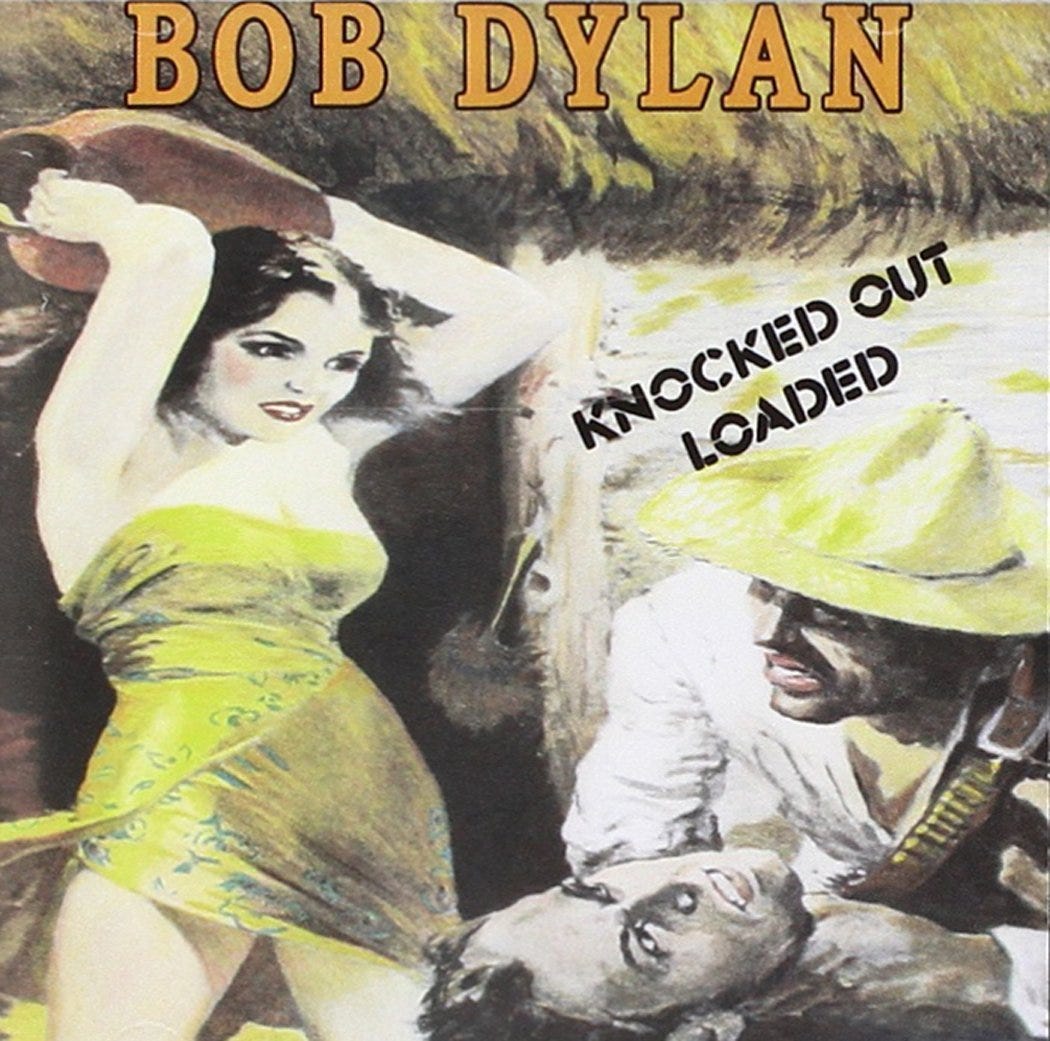
His Bobness also gave us one of his worst albums that year, packaged in one of his goofiest covers.15 Yet, it also contained one of his greatest songs of the decade. Bob’ll do you like that. He also warned us that “It’s Hell Time, Man!” as he and the Heartbreakers delivered a kick-ass track to a film that didn’t really deserve it, Paul Michael “Starsky” Glaser’s Band of the Hand.
Elsewhere in ‘86, Bad Company reunited, not with Paul Rodgers,16 but with former one-time Ted Nugent vocalist Brian Howe, which broke my heart. Howe sounded like a poor man’s Lou Gramm, and made the mighty BadCo sound like a poor man’s Foreigner. It was the height of irony, since Foreigner started as a poor man’s Bad Company.17 I felt vindicated earlier this year when Simon Kirke admitted to Billy Corgan that if he had to do the Brian Howe years over again, he wouldn’t, claiming he was “coerced,” while confessing that he was doing “a lot of drugs” at the time. Sigh.
It did seem for a spell in the mid-’80s that veteran rockers forgot how to, well, rock. 38 Special, who had at least thrown the dwindling number of southern rock fans in their corner a bone or two with each album since Special Forces, by ‘86 had turned completely pop18 with Strength in Numbers. Triumph also drenched their positive-message Canadian rock in synthesizers for The Sport of Kings.
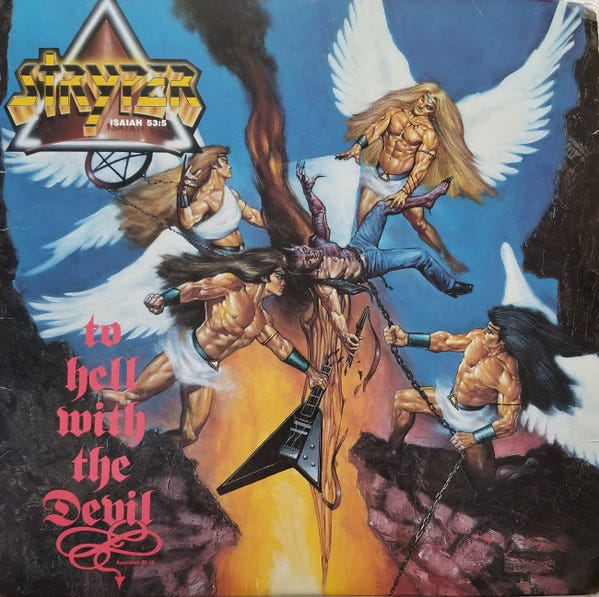
Meanwhile, the young turks took advantage of the fact that hard rock was becoming the dominant force on the radio and MTV by the mid-‘80s. So much so that we were treated to the first Christian Metal platinum album, as Stryper unleashed To Hell With the Devil,19 the follow-up to the yellow-and-black-attack’s album from the previous year, Soldiers Under Command. It was the ‘80s way to defend against the Satanic Panic.
The hard rock world by 1986 had split into at least two camps: the bubblegum metal group (later retro-fitted with the term “hair metal”) and the thrashers. But the hair split even more ways. The New Wave of British Heavy Metal folks—Iron Maiden and Judas Priest—both released controversial albums that year, taking on then-new tech with varying degrees of success. While Maiden’s Somewhere in Time artfully incorporated guitar synths into their sound, Priest’s Turbo was just embarrassing. Interestingly, listening back now, it’s more fun and not quite as bad as I remember, but still … OK, yeah, it’s pretty dreadful. “Turbo Lover” could’ve just as easily been a Billy Idol track (not that there’s anything wrong with that, it’s just not, say, Screaming for Vengeance).
Of course, Bon Jovi’s Slippery When Wet was pretty much the rock album of the year,20 and it was everywhere in my high school. My prom even played “Never Say Goodbye,” for Pete’s sake. JBJ injected a little more distortion and many more cliches into his Springsteen-lite formula, filling the Jersey void left between Born in the USA and Tunnel of Love. Still, they saw a million faces, and apparently rocked them all.
Then there was the execrable “Final Countdown.” Jesus H. Christ. I am convinced that people who blast music like this and Kenny Loggins’s “Danger Zone” don’t really like music at all. They just want something in the background to act as a soundtrack to their workouts or F-14 flying or speed skiing or whatever-the-hell. There’s no way someone can close their eyes and drift away a la Dobie Gray, while feeling a deep spiritual connection to keyboard stabs that sound like the Olympics’ opening ceremony. These sorts of songs are basically commercials in search of a product.
The Best of 1986
OK, now to the good stuff. Below are 25 albums and 25 honorable mentions that made an impact on yours truly in some form or another, and have hovered around my subconscious over the last 40 years. They’re followed by a mixtape of 86 songs that pull from this list and 36 more albums and/or singles at least worth mentioning. If you don’t see a favorite here, let me know in the comments.
Peter Gabriel - So
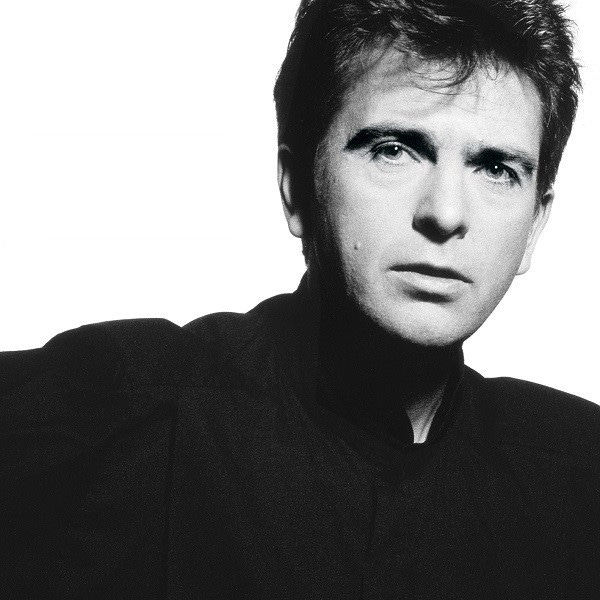
One of the great blockbusters in a decade loaded with them, So was Peter Gabriel stretching his sonic wings under the guiding atmospherics of Daniel Lanois. “Sledgehammer,” “Red Rain,” “In Your Eyes,” and “Don’t Give Up” were so meticulously constructed, so expertly performed, that they became part of the culture. So delivers not one bad note, and it still sounds just as fresh 40 years on.
Metallica - Master of Puppets
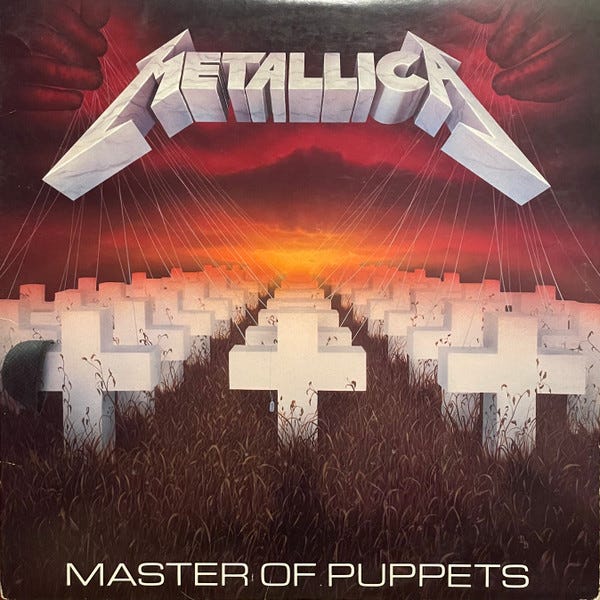
Is this the greatest heavy metal album of all time? Some think so, and I cannot find an argument against it. Cliff Burton’s final statement and Metallica’s masterpiece.
BoDeans - Love & Hope & Sex & Dreams
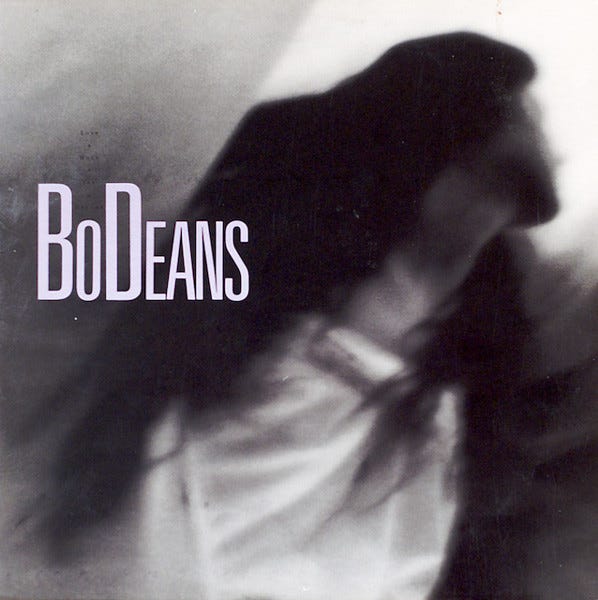
Before T Bone Burnett became the poor man’s Daniel Lanois and went all atmospheric-with-muddy-percussion on us in the early 2000s, he was a kickass roots-rock producer, helming the debut of this group out of Waukesha, Wisconsin, with a deft hand. Although its title is a nod to the Stones’ “Shattered,” Love & Hope & Sex & Dreams has a swagger all its own. One of the great debuts of the decade.
RUN-DMC - Raising Hell
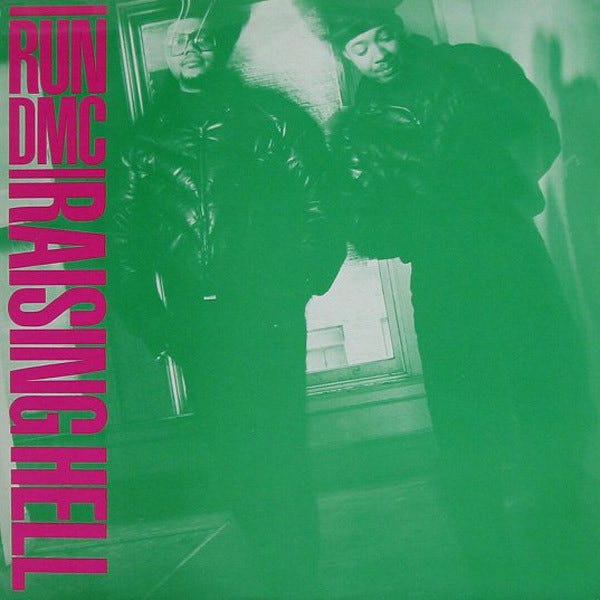
Much more than “Walk This Way,” but you can’t deny that collaboration’s impact on both the rock and rap crowd. Looking back now, it’s apparent RUN-DMC was consistently releasing some of the best, most intense music of the ‘80s while forcing us all to listen, thereby pushing hip hop into the mainstream. This is the album that finally broke through.
Madonna - True Blue
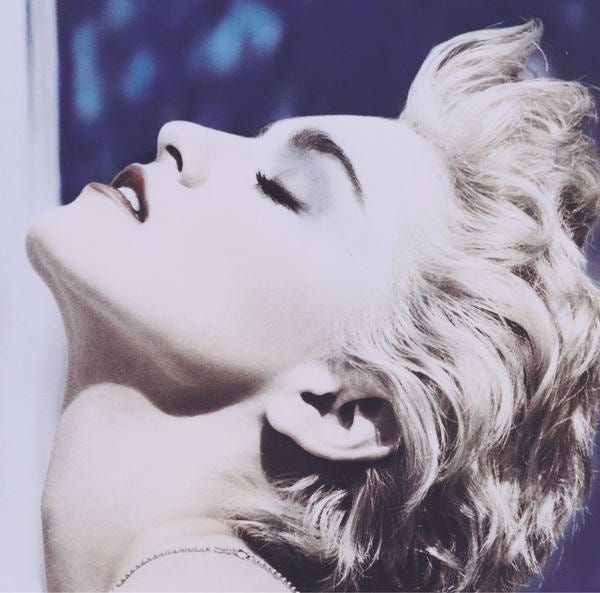
Madonna had gone through so many personas and images by True Blue that it was hard to keep up. It was also difficult for rock fans like me to give her credit for the groundbreaking badass she was at the time. I’m here to say, with a heaping plate of crow, that she deserves all the flowers she can get. From the brilliant “Live to Tell” to the defiant “Papa Don’t Preach,” True Blue was Madonna proving she could do more than shock.
Georgia Satellites - Georgia Satellites
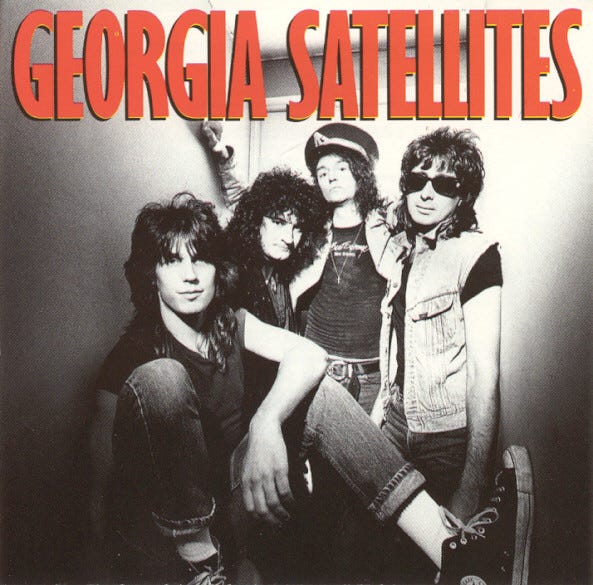
I don’t really think “Keep Your Hands to Yourself” was the first song I heard by the Sats. I believe it was “Golden Light,” when it aired on NC State’s college station, WKNC, and to these ears, it sounded more like R.E.M. than the rhunka-rhunka they hit with. Still, I was hooked. Probably no other album of the ‘80s outside of maybe Reckoning made such an impact on me as the debut from these rock’n’roll ne’er-do-wells. They validated my tastes on the world stage, letting me know I wasn’t alone, that even though the Stones were putting out less-than-stellar material that very year, their spirit was still alive, as was the spirit of Rod Stewart’s “Every Picture Tells a Story” (which the Sats boldly cover here), even as its creator was subjecting us to “Love Touch.” To this day, I’ll put “Railroad Steel” up against almost anything that calls itself rock ’n’ roll.
Robert Cray - Strong Persuader
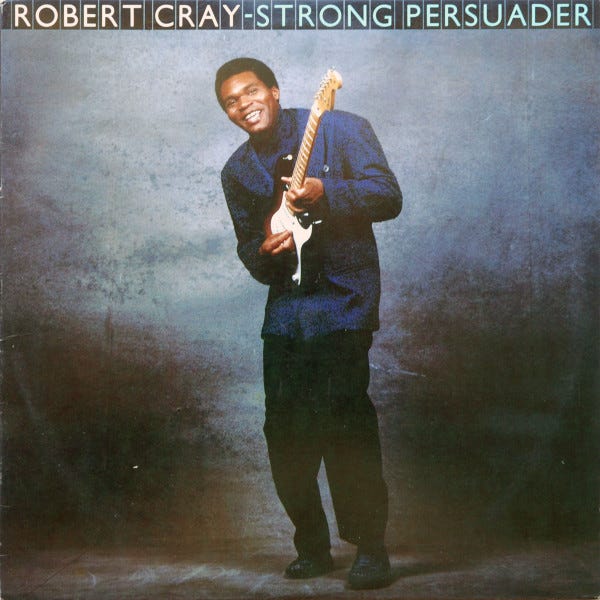
There’s no denying Stevie Ray Vaughan was an amazing guitarist, and he and Double Trouble placed straight-up blues back into the public eye and onto the charts. The unfortunate side-effect, however, was the impact it had on other young(ish) blues guitarists of the era. It wasn’t just SRV—rock guitar in general (thanks to Eddie Van Halen, Randy Rhoads, and their ilk) had become a test of speed and endurance rather than taste and feel. It was apparent when it came to Robert Cray, one of the great bluesmen of the last 50 years, whose debut was an exercise in soulful restraint. It grooved, and it had stories to tell, like the cold-as-ice title track. I can’t tell you the number of boneheaded rockers who dismissed Strong Persuader because Cray didn’t “shred” like Stevie Ray. Their loss.
Paul Simon - Graceland
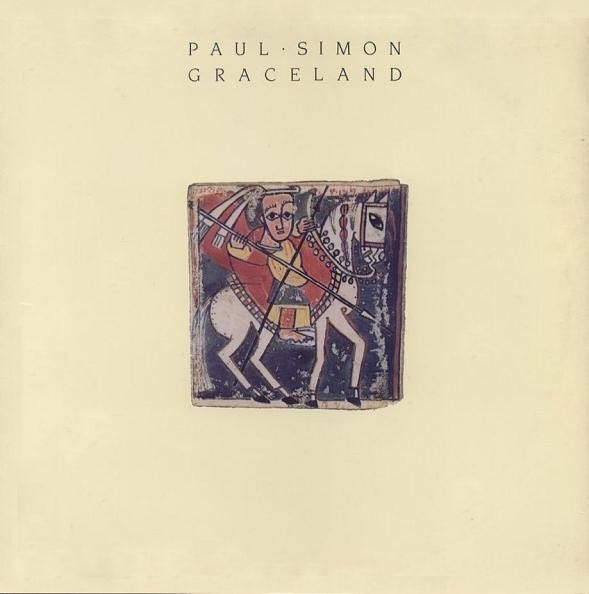
Sure, there’s controversy around this album, and yes, Simon should’ve given credit where it was due,21 but Graceland is a landmark album and a monumental achievement either way. It brought world music to the suburbs and introduced acts such as Ladysmith Black Mambazo to an audience that may have never had the chance to hear them. While it was undoubtedly a record of its time, Graceland still sounds as fresh and vital today, and if that’s not the mark of a classic, I don’t know what is.
Fabulous Thunderbirds - Tuff Enuff
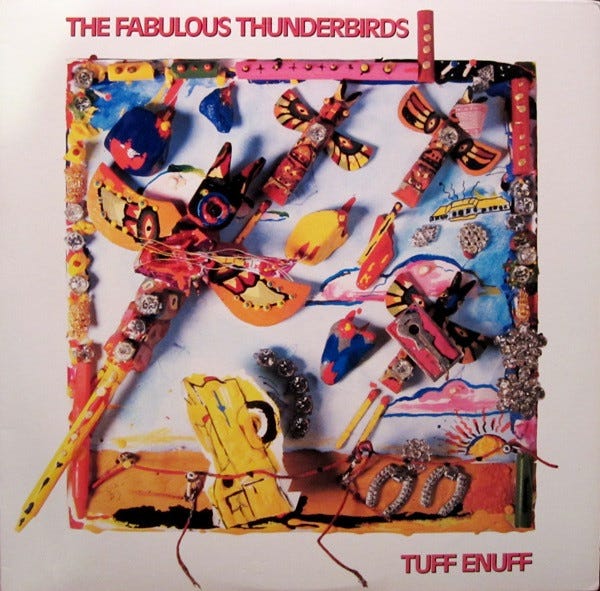
While Stevie Ray Vaughan was burning up the road and the charts with his incendiary updating of the blues, his big brother Jimmie, along with Kim Wilson, led the Fabulous Thunderbirds into the mainstream after years of sweating it out in the Austin clubs. Tuff Enuff smoothed out the T-Birds‘ rowdy roadhouse ways just enough for its title track to hit rock radio, while they deftly rode the wave of the roots-rock revolution in the latter part of the decade. Although 40 years on, the group continues with only Wilson as the sole original member, both he and Vaughan have shown they’re still tuff enuff to keep rockin’ the blues.
Steve Earle - Guitar Town
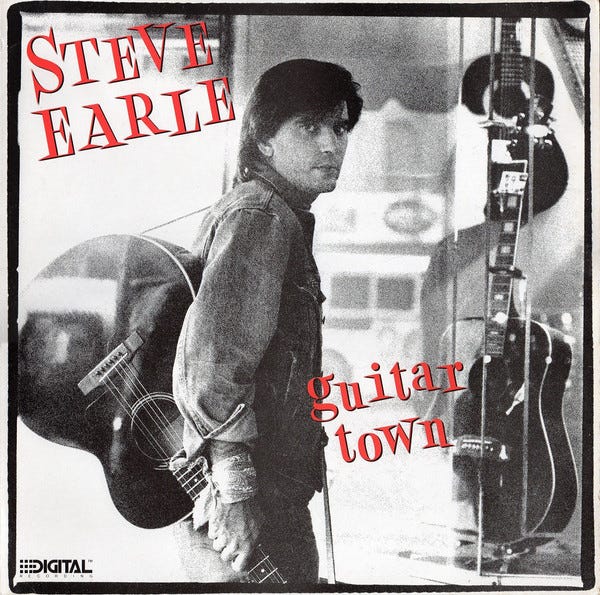
The title track is one of the boldest statements-of-purpose album openers of all time. Not only that, it deserves a place right up there with “On the Road Again,” “Turn the Page,” and “The Load-Out” as one of the great life-on-the-road testimonials. By the time of his full-length debut, Steve Earle had spent well over a decade paying his dues from Texas to Tennessee, playing bass for Guy Clark, and winning—and losing—a record deal with Epic. Thankfully, Tony Brown knew what he had, and he produced one of the great debuts in country music history, kickstarting another wave of outlaws that would ultimately carry the torch into the new century.
R.E.M. - Lifes Rich Pageant
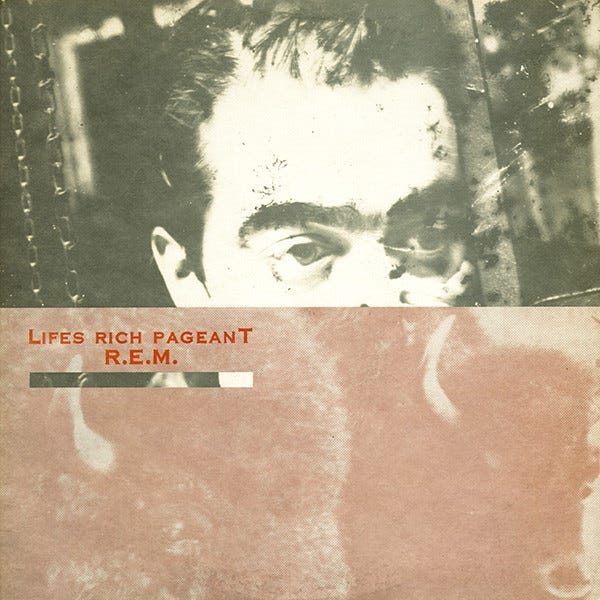
Enlisting Don Gehman to produce, R.E.M. placed their murky southern gothic tales onto a more muscular framework with Lifes Rich Pageant. They even met Gehman on his home turf, square in the heartland at John Mellencamp’s studio in Belmont, Indiana. The result was R.E.M. edging ever closer to the mainstream, widening their base, one brilliant album at a time.
Black Sabbath - Seventh Star
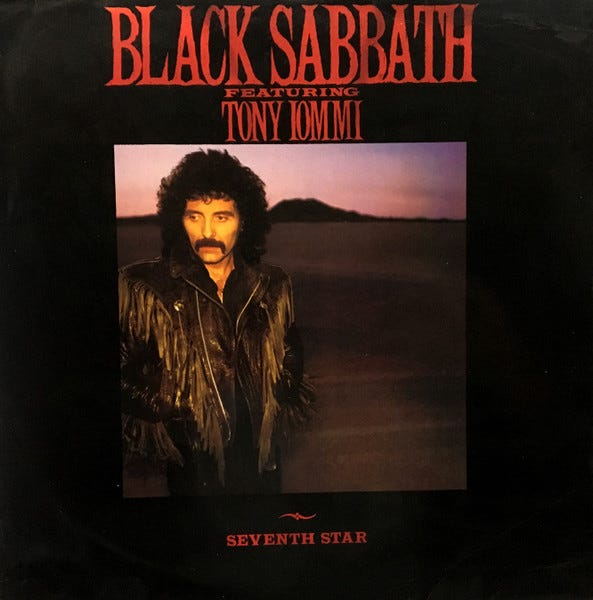
When discussions of Black Sabbath arise, devoted fans will generally slowly step away from me as I mostly wave off the Ozzy era while extolling the virtues of not only Dio’s masterful contributions, but the brilliance of Born Again. By the time I get around to praising Seventh Star as one of my top three all-time Sabbath moments, I’m usually talking to myself. Yes, it’s technically a Tony Iommi solo record, but Warner Bros freaked out until he labeled it a Sabbath release “featuring” him.22 Either way, if the album only housed the foreboding title track and the blues-soaked “Heart Like a Wheel,” it would be a classic, but adding “No Stranger to Love,” while topping it off with Glenn Hughes’s peerless wail, and you’ve got yourself one helluva hard rock album by ‘80s standards. Sure, they sounded in spots like Whitesnake with a Bad Company fetish, but … eh, I don’t see the problem.
The Smiths - The Queen is Dead
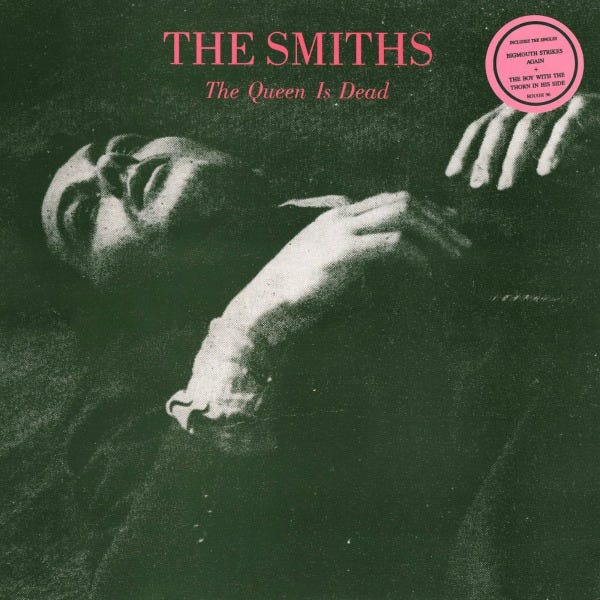
The Queen is Dead presents The Smiths at their best. Morrissey comes off as a younger Ray Davies as he skewers—or at least delivers witty observations of—British class structure, while Johnny Marr couches him in dense and inventive guitar work throughout. A masterpiece worthy of its reputation.
The O’Kanes - The O’Kanes
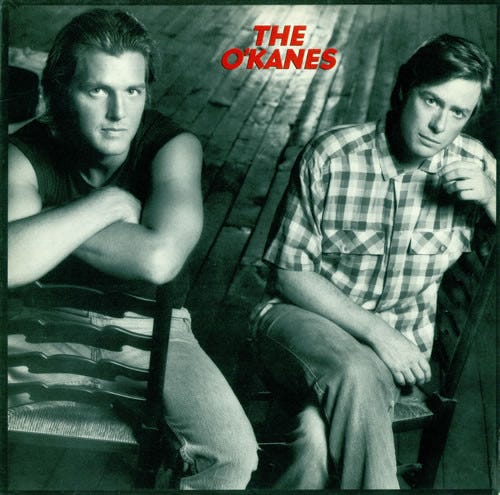
The year 1986 boasted one of the strongest years of quality country debuts in the genre’s history, and right up near the top was the first collaborative effort from songwriters Jamie O’Hara and Kieran Kane, collectively known as The O’Kanes. A debut of haunting acoustic beauty, underscored by their Everly-like harmonies delivered with a darker edge, and boasting “Can’t Stop My Heart from Loving You,” “When We’re Gone, Long Gone,” and the chilling simplicity of “Bluegrass Blues,” The O’Kanes is still in heavy rotation in this house.
Iron Maiden - Somewhere in Time
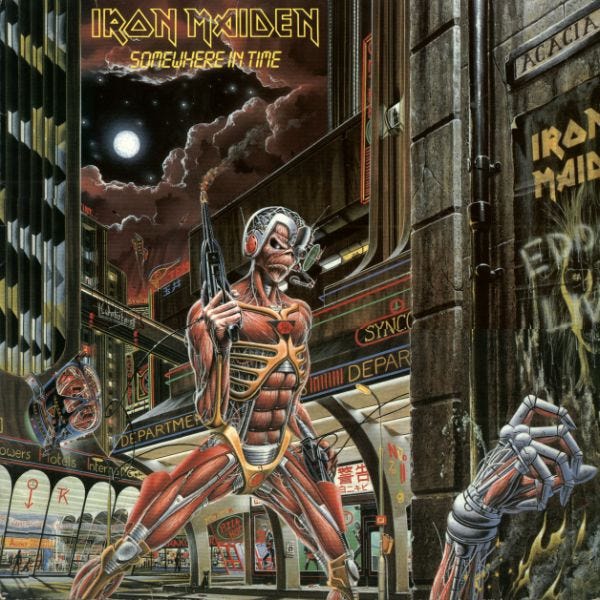
With the group burned out from an extensive world tour, guitarist Adrian Smith stepped up and contributed Somewhere in Time’s two singles. Bassist Steve Harris, of course, took care of the rest (with an assist from other guitarist Dave Murray on “Deja-Vu”). Synths were verboten for many veteran rockers in 1986, while others unsuccessfully tried to bend to the whims of the marketplace with embarrassing results. Maiden took a chance by incorporating it into their already established galloping metal assault. The result was an album that can proudly stand alongside their classics.
Steve Winwood - Back in the High Life
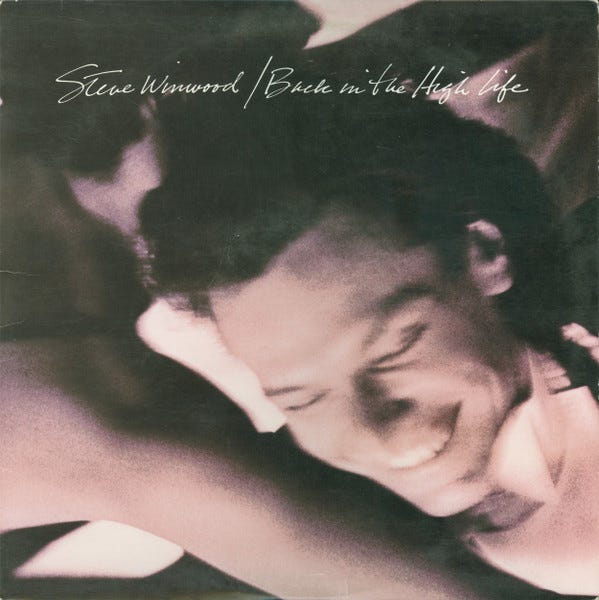
By the mid-1980s, the boomers who were drafted, marched in the streets, or dropped acid at Woodstock (or all of the above) were all grown up with mortgages, families, stock options, and/or cocaine habits. The acts that were the soundtrack of their youth were now providing the background music of their middle age. Eric Clapton, Tina Turner, Van Morrison, Neil Young, and Genesis all released albums in 1986. None were as successful—nor defined the decade—quite like their fellow peer Steve Winwood’s Back in the High Life. It somehow made the most of its ‘80s production without sounding trapped in it. The songs still resonate, so much so that it’s guaranteed that something from it is playing in a dentist’s office somewhere right now.
Mojo Nixon and Skid Roper - Frenzy!
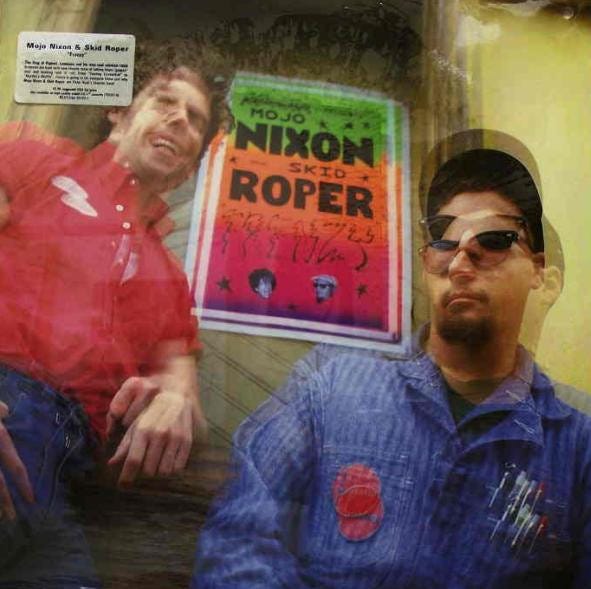
The very first Mojo Nixon & Skid Roper song I ever heard was “Where the Hell’s My Money” on NC State’s WKNC’s Night Wave. I’d never heard anything like it. Well, I had, but never mashed together in one frenzied stew. It was basically southern-tinged cowpunk rockabilly blues. From there, I picked up their self-titled debut and was hooked. Frenzy is a bit broader, as second albums should be, but it embodies the same spirit: skewering everything from sleazy sumbag club owners to toddlers to financial institutions to nuclear war to Bigfoot to MTV’s Martha Quinn while celebrating NASCAR legend Wendell Scott. Great googelly-moogelly!
The Beastie Boys - License to Ill
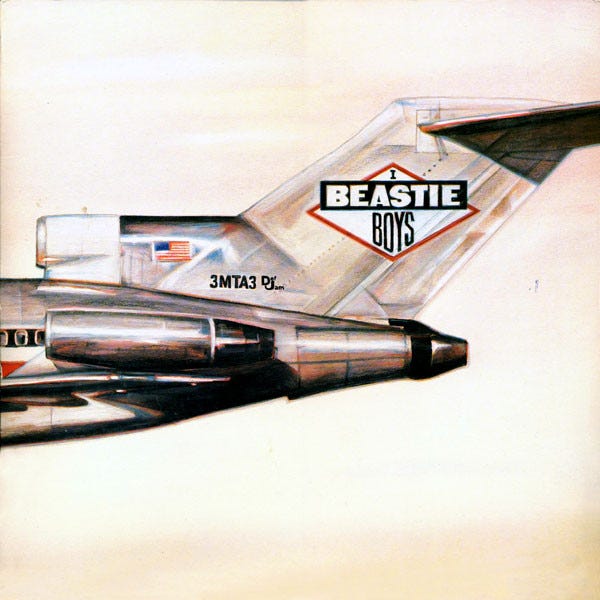
Since this was many white kids’ introduction to rap, in this respect, you could designate the Beastie Boys as the Elvis(es) of hip hop. Opening with the confrontational sampling of Bonzo’s drum track from “When the Levee Breaks” on the album-opening “Rhymin and Stealin,” producer Rick Rubin knew he’d be making all the rock kids clutch their pearls, doubling down by using “The Ocean” for “She’s Crafty.”23 Employing Slayer’s Kerry King24 to lay down the whacked-out guitar solo for “No Sleep ‘Til Brooklyn” continued the marriage of rock and rap that Rubin was trying hard to achieve in 1986. License to Ill’s massive success proves both he and the Beasties were on to something.
Siouxsie and the Banshees - Tinderbox
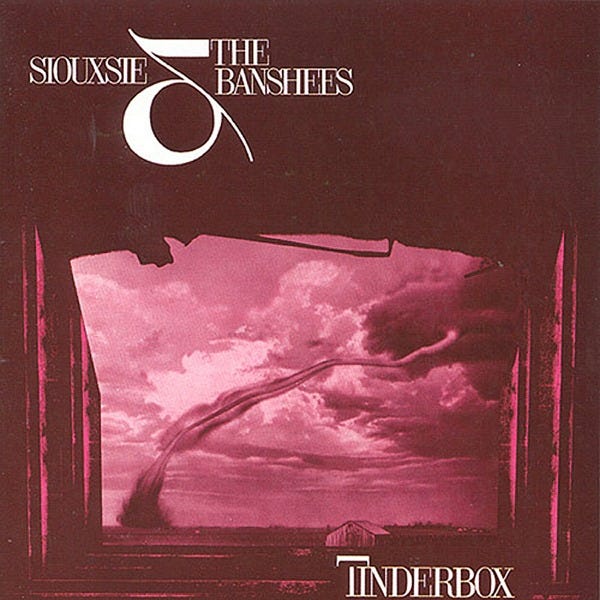
Tinderbox was basically the sound of MTV’s 120 Minutes condensed down to about an hour. It was also Siouxsie and the Banshees’ most intense and aggressive statement to date. The songs build and expand into full-on assaults of sound throughout, while still maintaining a steady groove in tracks like “This Unrest.” Of all the albums on this list, Tinderbox is most representative of the sound of youth in the mid-1980s.
Dwight Yoakam - Guitars, Cadillacs, Etc., Etc.
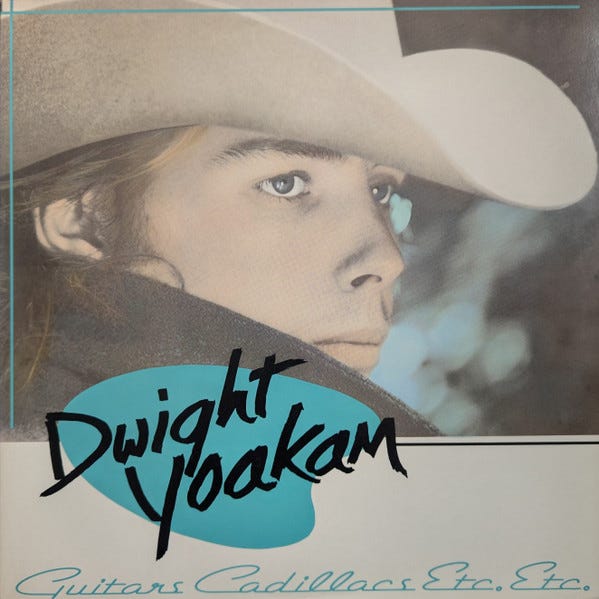
One of the several astounding country debuts of 1986, Yoakam expanded the EP he’d been shopping around into his first full-length for Reprise. He’d already made a name out west in the fledgling cowpunk movement, and now he was selling honky-tonk music back to a format that had abandoned it over the last few years. Here’s where the template was laid—not only for the rest of Yoakam’s career, but for the future of what became alt-country and, ultimately, Americana.
Van Halen - 5150
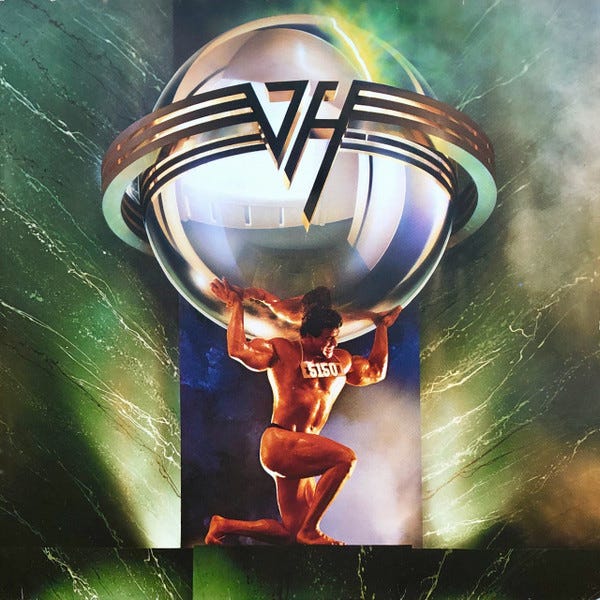
In 1986, your character was determined by which side of the Hagar/Roth divide you landed, as 5150 split hard rock fans down the middle. Sammy Hagar was no spring chicken, having led the mighty Montrose through a handful of ‘70s hard rock classics and enjoying quite a bit of solo success before landing in the front seat of the biggest band in the world at the height of its popularity. But Roth was a big mouth to fill, and, while 5150 expanded the keyboard-forward sound that began with 1984, Hagar’s lyrics were more saccharine and sentimental in tone, and his juvenile side came across as forced or, at worst, creepy, contrasted with the effortless, vaudeville-inspired, natural goofiness of Roth.25 That said, 5150 is packed with hooks and memorable moments (which warrants its inclusion here), even if they don’t rise to the level of VH with Roth.
Elvis Costello - King of America / Elvis Costello & The Attractions - Blood and Chocolate


Might as well make this a two-fer. Costello released two fine works in ‘86—a sort of yin and yang of minor masterpieces. Whereas King of America found Mr. MacManus exploring all the merging of country and rock with a handful of studio pros, Blood and Chocolate paired him with the Attractions again (with Nick Lowe behind the board) and rocks with vicious, and visceral, abandon. Playing two sides of the same coin made 1986 a banner year for Costello.
Eddie Hinton - Letters From Mississippi
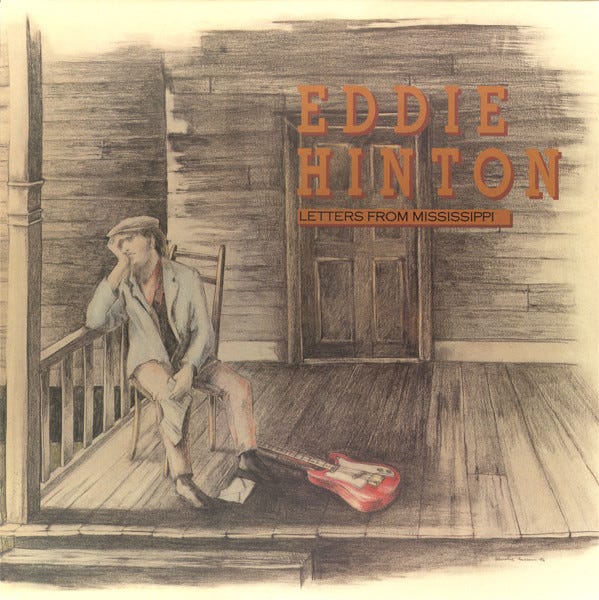
One of the great overlooked southern soul albums, Letters from Mississippi, presented Eddie Hinton at his absolute troubled best. Flanked on most tracks by the Swampers with Jimmy Johnson producing, Letters is raw soul with none of the production trappings of the year it was released, allowing the performances and, especially, Hinton’s vocals, to deliver nothing but pure southern soul.
Randy Travis - Storms of Life
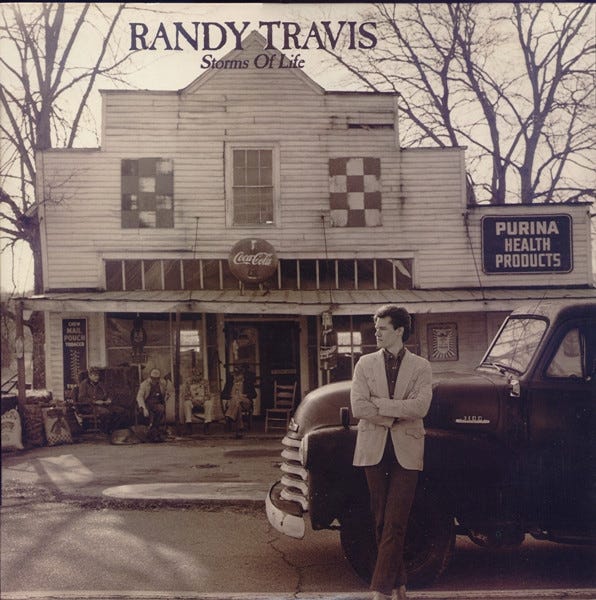
Of the plethora of incredible country debuts in 1986, none ruled the country charts as massively as Storms of Life. Marshville, NC’s Randy Travis hit the ground running with one of the great country debuts of all time. From the Don Schlitz / Paul Overstreet-penned lead-off track, “On the Other Hand,” through “Diggin’ Up Bones,” “1982,” and “No Place Like Home,” the hit singles kept coming, but Storms of Life was much more than the chart-toppers. From the title track through the devastating “Reasons I Cheat” and the two-steppin’, forward-looking closer, “There’ll Always Be a Honky-Tonk Somewhere,” Travis crafted a timeless, true country classic that, 40 years on, hasn’t aged one bit.
Van Morrison - No Guru, No Method, No Teacher
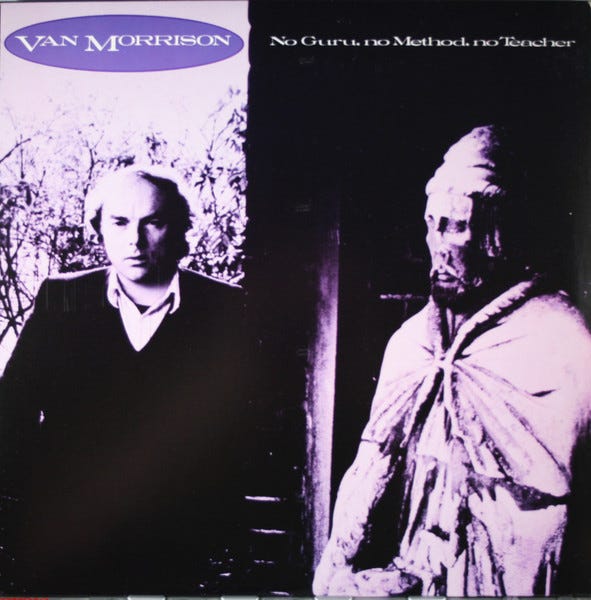
Throughout the 1980s, Van Morrison was searching for his spiritual soul; he was reaching for enlightenment, for a sense of wonder. The closest he came may have been on 1986’s No Guru, No Method, No Teacher. Like most of his work at the time, it reflected the aural equivalent of transcendental meditation. Reaching back to Astral Weeks, No Guru offers solace and tranquility in a world seemingly devoid of it. Spinning it 40 years on, its message is needed more now than ever.
Honorable Mentions:
Janet Jackson - Control
Lyle Lovett - Lyle Lovett
Clarence Carter - Dr. CC
Crowded House - Crowded House
John Fogerty - Eye of the Zombie
The Firm - Mean Business
Hüsker Dü - Candy Apple Grey
Slayer - Reign in Blood
Prince - Parade [Music from the Motion Picture Under the Cherry Moon]
Genesis - Invisible Touch
Timbuk 3 - Greetings from Timbuk 3
Bruce Hornsby and the Range - The Way It Is
David + David - Boomtown
Roy Buchanan - Dancing on the Edge
Bad Brains - I Against I
Kathy Mattea - Walk the Way the Wind Blows
Iggy Pop - Blah Blah Blah
New Order - Brotherhood
The Smithereens - Especially for You
Let’s Active - Big Plans for Everybody
Motörhead - Orgasmatron
Don Williams - New Moves
Cameo - Word Up!
Public Image, Ltd - Album
Megadeth - Peace Sells…But Who’s Buying
The Big 86 from ‘86 Mixtape:
Now, for all of the above plus 36 more, here’s a Mixtape of The Big 86 from ‘86. You’ll see/hear some tunes from albums that almost made the list, as well as a few well-worn favorites. As always, the following Mixtape was carefully sequenced to maximize enjoyment, but if you’d rather just hit “shuffle,” feel free. (Although I will be over here silently judging you.)
If you see any of your favorites missing, please let me know in the comments. No matter how much time I put into these things, I always miss something obvious. It’s maddening.
One more program note: Yes, there’s a Spotify playlist embedded here, but I’m also offering a way at the link below to listen on the streaming service of your choice.
Hate Spotify as much as I do? Click here to listen to the Mixtape on the streaming service of your choice!
Further Reading:


https://www.prsformusic.com/m-magazine/news/teen-listening-habits-dictate-music-tastes-adulthood
How could I find Growing Pains enjoyable after growing up with Happy Days and M*A*S*H?
Although we thought it was “too pop for Ozzy” at the time, in retrospect, “Shot in the Dark” deserved to be the rock hit that it was.
Warren was one of those laid-back southern kids who never seemed to be bothered, and he looked exactly like Tom Petty.
So many tapes were punched in, ejected, and thrown about from that Camaro every afternoon, while it was parked behind the Fast Fare across from the school. Y&T’s Down for the Count and Change of Address by Krokus were especially horrible.
Although I first remember seeing Pee Wee Herman as a kid back in 1981 on HBO in a much different production, more like a play aimed at adults, while masquerading as a kids’ show. To this day, that’s the Pee Wee that made the biggest impression.
Why we still give this guy airtime after all these years is beyond me.
…and all four stories in Different Seasons, for that matter, plus everything else King wrote from the ‘70s through the ‘90s at least.
Stone himself was a Vietnam vet, serving in the US Army as an infantryman with 2nd Platoon, B Company, 3rd Battalion, 22nd Infantry Regiment, 25th Infantry Division. Platoon was the first of his Vietnam trilogy, followed in 1989 by Born on the Fourth of July and in 1993 by Heaven & Earth.
I dug Orion the Hunter and RTZ more by that point anyway.
I found something to like about all of them, but man, hard rock was one divisive genre.
Throughout the remainder of the ‘80s and all through the ‘90s, every single party I ever DJ’ed, or where my band played, wanted to hear “Strokin’”—and I mean every single party and club. Many would do the electric slide to it while, of course, singing along to every word. Forget “Free Bird;” “Strokin’” is the anthem of the South.
…who I’d pay good money to see cover “Strokin’.”
…who was still busy with The Firm.
Even more infuriating was the fact that this late-‘80s incarnation would hit the top 20 with the generic ballad, “If You Needed Somebody,” just two years later.
Don Barnes even went full-on mid-’80s look.
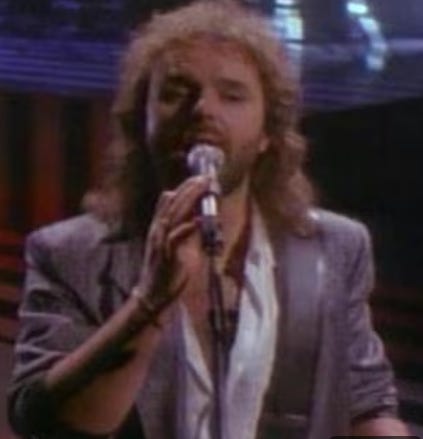
The big ballad—all hard rockers had ‘em in the ‘80s—on To Hell With the Devil was “Honestly.” A girl I was dating that year wanted it to be “our song.” I told her it couldn’t because “They weren’t singing about love between a boy and girl. They were singing about their relationship with Jesus.” How could anyone compete with that? She broke up with me soon after.
Although the rock talk of the year was Van Halen vs. David Lee Roth.
Just don’t bring up Simon around Los Lobos. https://glidemagazine.com/88297/steve-berlin-still-thinks-paul-simons-a-fucking-idiot/
Spoiler alert: all Sabbath albums feature Iommi, for goodness’ sake. (Or should that be Geezer’s sake?)
Hilariously, Robert Plant himself used the same playbook just a couple of years later for “Tall Cool One.”
Rubin, of course, was also busy producing Slayer’s Reign in Blood around the same time.
Just compare 5150 with Roth’s debut, Eat ‘em and Smile—as Roth enlisted the talents of Zappa’s “stunt guitarist,” Steve Vai—that same year.
david & david. sonic time travel.
Good times there. The year that sparked the rebellion. I was 12 and onto some of the records, I’d catch up pretty quick. Loved the GASatelites record. Still had GI Joe stuff in the midst of my budding metal head collection. Posters of Heather Thomas and a Lambo on the wall. I’d hoped for freedom summer when my brother got his license, but like a good older brother he left me in the dust in my Boy Scout uniform. Living in Connecticut at the time we had junior high 7th and 8th - gladiator camp before real high school - first time around kids from the projects and got a taste of a different world and actually understood Raising Hell and Master of Puppets. Thanks to Diamond Dave for keeping some light in the world of heaviness.